BIO
Robert Ōzn’s career is defined by a continuous exploration of the voice as both instrument and identity. His artistic journey bridges worlds that rarely meet—classical training, jazz tradition, Broadway stagecraft, and innovations in electronic music—shaped by a distinctive voice and a striking artistic presence that established him as an iconic figure of the early MTV era.
He began as a child soloist with the New York City Metropolitan Opera, later trained in classical voice and acting at the Jacobs School of Music, and toured as a jazz vocalist with The Tonight Show Band under Doc Severinsen—performing alongside musicians such as Buddy Rich, Lew Tabackin, Snooky Young, and Mel Tormé. Returning to New York City, he created roles in two original Broadway casts, performed leading roles in major musical theatre tours, and began working as a New York session singer before writing unconventional music and lyrics that integrated sounds and concepts across disciplines, developing foundations in phrasing, nuance, and emotional connection with audiences.
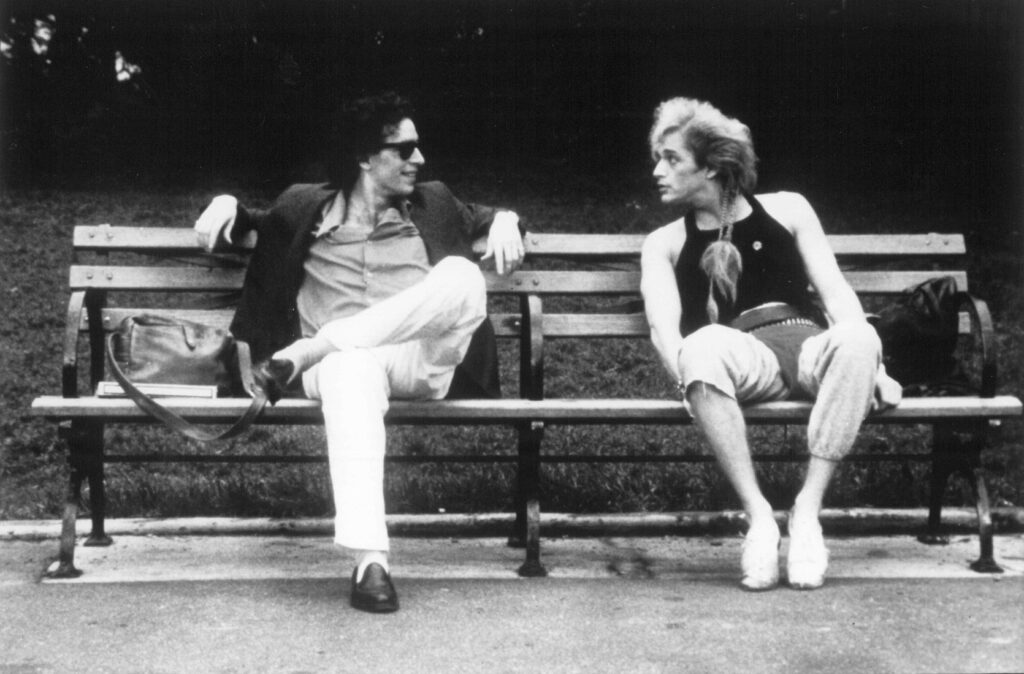
Emerging from the downtown New York new music and new wave scene, Ōzn established himself as a striking and unconventional presence—part vocalist, part artistic provocateur—at an evolutionary moment when music, video, and technology were converging in entirely new ways.
As one half of ĒBN-ŌZN, he was central to a series of early innovations that helped redefine both music production and vocal performance. Their first single “AEIOU Sometimes Y”, on Elektra Records, is widely credited as the first commercially released and charting U.S. recording made entirely on a computer using the Fairlight CMI, and achieved rare crossover between multiple radio formats—including rock, alternative, urban, and college radio—at a time when such genre fluidity was highly unusual. The recording was later inducted into the Alternative Music Hall of Fame as a “Masterpiece Single” (Class of 2024). Its accompanying music video further established Ōzn as a distinctive musical and dynamic visual figure of the alternative 80s music scene.
The duo’s album “Feeling Cavalier” drew on a wide range of American and international styles, blending electronic music, sound design, and Ōzn’s array of vocal characterizations, including a salsa track featuring Tito Puente.
He later extended this versatility into the international dance and house music scene with his solo project Dada Nada, achieving multiple Top Five Billboard U.S. and U.K. Music Week Dance Chart hits and generating over 1.2 million streams on SoundCloud, further establishing a vocal and songwriting style that connected traditions across genres and found resonance with DJs, programmers, and audiences across musical boundaries.
Dada Nada recordings have included collaborators such as Sérgio Mendes’ percussionist Gibby Dos Santos, guitarist Julian Coryell (son of jazz guitarist Larry Coryell), Emmy Award–nominated producer Gabe Lopez, and dance music legend Frankie Knuckles, often regarded as the godfather of house music.
With both ĒBN-ŌZN and Dada Nada, Ōzn developed a vocal approach that moves fluidly between sung melody, rap, spoken word, and character-driven voices, and remains uniquely his own today, earning the moniker “the Wizard of Ōzn” from the UK’s Music Week Magazine.
A live artist since the age of ten, he brings decades of experience onstage, in the studio, and on camera, having performed across a wide range of settings—from classical venues and Broadway theatres to auditoriums, stadiums, and clubs of all sizes.
Now, in a new project, returning to his passion for jazz, he brings a mature and distilled approach to ballads and swing drawn from the great songwriters of the theatre and the American Songbook, alongside innovative interpretations of contemporary repertoire—all unified by a singular focus on expression through the human voice.